
Last Updated: October 28, 2026
Quick Summary
Residential locksmiths serve homes, apartments, and vehicles, handling lockouts, rekeys, and deadbolt installs for a single household. Commercial locksmiths serve offices, retail spaces, and warehouses, where work involves more doors, multiple access levels, and formal security requirements. Residential vs commercial locksmith work differs in hardware, keying systems, and documentation.
- Commercial doors are often hollow metal or solid core and frequently use mortise locks.
- Using residential hardware on a commercial door can fail under daily use and miss building requirements.
- Master key systems let one key open many doors but need strict key control and a written log.
- Fail-secure locks stay locked during power loss, while fail-safe locks unlock, so the choice matters on exit doors.
- Ask for a written estimate separating labor, hardware, and after-hours fees before work begins.
Table of Contents
- What Residential Locksmiths Do
- What Commercial Locksmiths Do
- Residential vs Commercial Locks: Hardware and Security Differences
- Master Key Systems for Businesses and When They Make Sense
- Commercial Access Control Installation and Compliance
- Choosing the Right Locksmith for Your Property and Booking Your Service
- Frequently Asked Questions
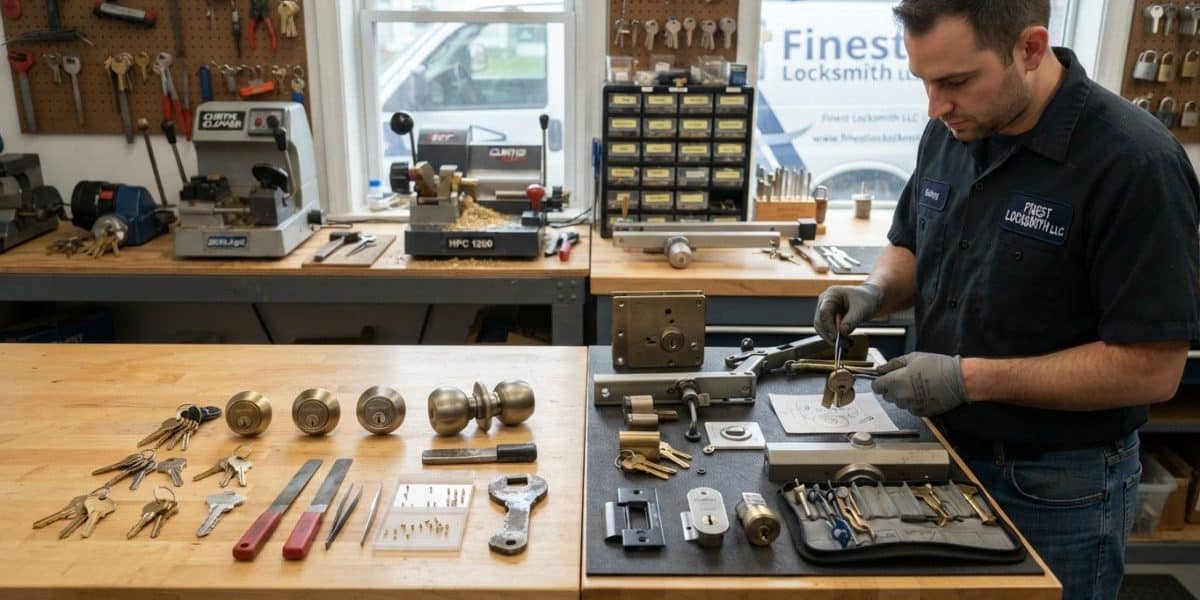
Choosing between a residential and a commercial locksmith is not just a matter of price, because the residential vs commercial locksmith question affects which tools a technician brings. The residential vs commercial locksmith question affects which tools a technician brings, how quickly they can respond, and what paperwork you may need afterward. Finest Locksmith LLC has served the Greater Boston area since 2008.
Residential locksmiths focus on homes, apartments, and vehicles, keeping a single household safe and getting people back inside quickly. Our residential locksmith services cover lockouts, rekeys, and deadbolt installs for homes. Commercial locksmiths focus on offices, retail spaces, warehouses, and multi-tenant buildings, where work involves more doors, more people with different access levels, and more formal security requirements. The two overlap but are not interchangeable.
Here is how the two services generally differ:
| Factor | Residential | Commercial |
|---|---|---|
| Typical property | Houses, apartments, cars | Offices, shops, warehouses |
| Common requests | Lockouts, rekeying, deadbolts | Master key systems, access control, panic hardware |
| Key management | One household, a few keys | Many users, key control logs |
| Documentation | Usually a receipt | Often invoices, key logs, and compliance records |
What Residential Locksmiths Do
Residential locksmiths handle the problems most homeowners face: a lost key, a broken lock, or a door that no longer latches.
Common residential work includes lockout assistance, lock installs and repairs, and security upgrades.
What Commercial Locksmiths Do
Commercial locksmiths work on properties where security decisions affect many people. An office may have dozens of employees needing access to different rooms; a retail store may need separate keys for the owner, manager, and cleaning crew. Commercial work is about control, not just entry.
Finest Locksmith LLC provides commercial locksmith services, including commercial lock installations and access control solutions.
Residential vs Commercial Locks: Hardware and Security Differences
Key differences include:
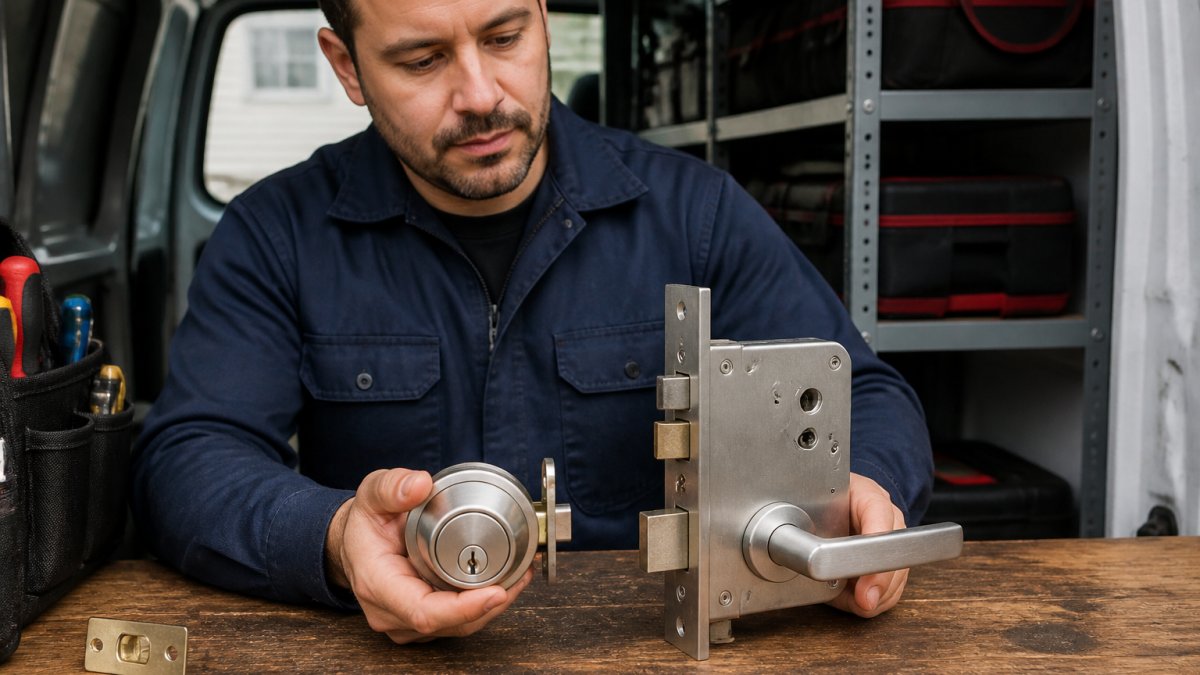
Using residential hardware on a commercial door is a common and costly error. A standard deadbolt may pass a quick visual check but fail under daily use and may not meet commercial building requirements. Matching the lock to the door type and use case matters more than the brand name.
Lock grades, explained without the sales pitch
A Grade 3 deadbolt may be adequate for a front door in a quiet house, but the same lock on a storefront that cycles hundreds of times a day is a false economy. The labor to replace it again in a year often costs more than the upgrade to a commercial-grade unit.
Door type drives the hardware decision
Residential doors are usually 1-3/4-inch thick wood or fiberglass slabs with a bored cylindrical lock or tubular deadbolt. Commercial doors are more often hollow metal or solid core, frequently using mortise locks that house the latch and deadbolt in a single case set into the door edge. That difference matters because:
- Mortise locks distribute force across a larger area of the door and are common on offices, schools, and retail entries.
- Cylindrical locks are simpler and cheaper to install but can loosen over time on high-traffic doors.
- Rim and vertical rod exit devices are common on commercial egress doors and must release with a single motion from the inside.
If a technician proposes drilling a residential-style deadbolt into a hollow metal commercial door without checking the door’s reinforcement, ask why. The right answer usually involves a door prep, a wrap plate, or a different lock body, not just a bigger screw.
Keying and key control
Residential keying is usually simple: one key for the front door, maybe a second for the back. Commercial keying is a system: a keyed-alike setup lets one key open several doors, and a master key system adds layers of access. Commercial cylinders often use interchangeable cores that can be rekeyed in seconds without removing the lock body, which changes the cost of a tenant turnover or lost-key event. Browse the locks available from Finest Locksmith LLC to compare hardware options.
What to ask before you approve hardware
- Which ANSI/BHMA grade is this product, and where is that shown?
- Does this lock match the door type and the traffic the door sees?
- If this is an exit door, does the hardware meet egress requirements for the building?
- Are the strike plate and frame reinforced for the lock being installed?
- Is the cylinder compatible with the keying system you already have?
Residential and commercial hardware are not interchangeable. Grade, door type, keying system, and egress requirements should drive the choice, not the brand on the box.
Master Key Systems for Businesses and When They Make Sense
A master key system lets one key open many doors while keeping access limited for everyone else. It usually has three levels: a change key for individual rooms, a master key for groups of rooms, and a grand master key for the whole building. Facility managers often rely on this structure for offices, schools, and apartment complexes.
Master key systems make sense when:
- Many people need access, but each needs different doors.
- You want to avoid carrying dozens of separate keys.
- You need a clear record of who holds which key.
- Your building changes tenants or staff often.
They are less useful for small offices with only a few doors, where a simple rekey may be enough. A master key system also adds risk if a grand master key is lost, so it needs strict key control and a written log. Finest Locksmith LLC recommends documenting every key holder and reviewing the list each time staff changes. You can compare residential and commercial lock installation options for your property type.
Commercial Access Control Installation and Compliance
Access control replaces or supplements mechanical keys with electronic credentials. Employees use key cards or fobs, the system logs each entry, and access can be revoked instantly when someone leaves, lost credentials can be deactivated in seconds instead of re-keying the building.
Installation involves more than mounting a reader. The technician must wire power and data connections, configure door schedules, and test fail-safe and fail-secure behavior. Fail-secure locks stay locked during a power loss, while fail-safe locks unlock. Choosing the wrong mode can block evacuation or leave a door open. Local fire and building codes often govern which mode is allowed on exit doors.
Before installing access control, confirm requirements with your building authority or fire marshal. Many U.S. jurisdictions follow the International Building Code and the Life Safety Code published by the National Fire Protection Association (NFPA). Your locksmith should coordinate with your building contractor or inspector, not work in isolation.
Choosing the Right Locksmith for Your Property and Booking Your Service
Start by asking what type of property you have. A homeowner needing a lockout has different needs from a property manager needing a keyed system for twelve units. Some locksmiths handle both, but many specialize. Ask directly whether a company works on residential and commercial properties, and what experience it has with your door type. Our guide on how to verify locksmith credentials explains what to check before booking.
A side-by-side way to pick the right specialist
Use the scenario, not the company name, to decide who to call:
| Your situation | Who usually fits | What to ask first |
|---|---|---|
| Home lockout, keys inside | Residential locksmith | Can you open it without damage, and what is the after-hours fee? |
| Home rekey after a move or lost key | Residential locksmith | Is rekeying enough, or does the hardware need replacement? |
| Office access-control installation | Commercial locksmith | Do you handle wiring, door schedules, and fail-safe/fail-secure setup? |
| Business lockout after hours | Commercial locksmith with emergency service | How fast can you respond, and can you secure the door until morning? |
| Multi-tenant master key system | Commercial locksmith | Can you document key holders and support future rekeys? |
| Mixed-use property (home plus storefront) | Either, if experienced in both | Which parts of the job are residential and which are commercial? |
Transparent pricing and cost drivers
No honest locksmith can quote a universal price without seeing the door, but a good one can explain what drives the number:
- Hardware: A standard residential deadbolt and a commercial-grade mortise lock are different products at different price points.
- System complexity: A single rekey is simpler than a master key system or an access-control install with multiple readers.
- Number of doors: Commercial jobs are usually priced per door or per opening, and the count matters.
- Urgency and time of day: After-hours, weekend, and holiday calls typically carry a premium.
- Door condition: A door that needs prep, reinforcement, or frame repair adds labor.
- Travel and access: Parking, building access, and distance can affect the final bill.
Ask for a written estimate separating labor, hardware, and after-hours fees. If a quote arrives before anyone has looked at the door, treat it as a placeholder, not a commitment.
Licensing, insurance, and verification
Credentials vary by state and locality, so ask what applies where you are. Practical checks:
- License: Ask whether the company holds any required state or local locksmith license and for the license number.
- Insurance: Ask for a certificate of liability insurance, especially for commercial work where a failed lock can affect a business.
- Identity verification: A reputable technician should be willing to show ID and confirm the company name before you let them work.
- Written estimate: Get the scope, price, and any fees in writing before work begins.
- Warranty: Ask what the work and hardware are covered for, and for how long.
Emergency response and service expectations
Residential emergencies are usually about getting one household back inside quickly. Commercial emergencies are about business continuity: a jammed storefront door at opening time, a lost master key, or a failed exit device can stop operations. Ask both types of providers:
- What is your typical response time for my area?
- Do you charge a flat emergency fee or an hourly rate with a minimum?
- Can you secure the door temporarily if the permanent fix needs parts?
- For businesses, can you provide after-hours service without disrupting customers?
When one locksmith can handle both property types
Finest Locksmith LLC offers 24/7 emergency lockout service, a flat price for emergency services, and residential and commercial locksmith services. Our experienced technicians provide solutions for your security needs. Call now!
Frequently Asked Questions
What is the difference between a residential and commercial locksmith?
Finest Locksmith LLC provides residential, commercial, and automotive locksmith services, including commercial lock installations and access control solutions.
Can one locksmith handle both residential and commercial properties?
Finest Locksmith LLC provides residential and commercial locksmith services.
Are commercial locks more secure than residential locks?
Commercial locks are generally built to withstand heavier daily use and more determined attempts at entry. Commercial-grade cylinders, strikes, and hinges typically carry higher ratings and are designed for high traffic, while residential locks prioritize convenience and cost. Security depends on the specific product, installation quality, and how the door and frame are constructed, so a properly installed residential deadbolt on a solid door can still be a strong option for a home.
Call Finest Locksmith LLC today for fast, reliable service on residential and commercial locks, including 24/7 emergency lockouts. Our experienced technicians can rekey, replace, or upgrade your locks while meeting the code requirements your property needs. Call now and let us secure your home or business.
