
Table of Contents
- What Makes a Residential Security Lock Brand Worth Choosing
- ANSI Grade 1 vs Grade 2 Locks: Understanding Security Ratings
- How to Choose a High Security Deadbolt for Your Home
- Key Features That Separate Top Residential Security Lock Brands
- Professional Lock Installation Services: Why They Matter
- Mechanical Reliability vs. Electronic Features: What Lasts
- Common Mistakes Homeowners Make When Selecting Locks
- Frequently Asked Questions
Last Updated: September 28, 2026
What Makes a Residential Security Lock Brand Worth Choosing
Choosing the best residential security lock brands means deciding how much you trust your home’s first line of defense. Quality locks offer reliability over decades, resistance to multiple attack vectors, and integration with how you actually live.
At Finest Locksmith LLC, we’ve installed locks across the Greater Boston area and seen which brands hold up under real-world conditions. The best residential security lock brands meet recognized security standards, withstand physical attacks, and are installed correctly by someone who understands the hardware.
Most homeowners choose locks based on price or convenience, a mistake that costs security. Quality residential security lock brands cost more upfront but eliminate the anxiety of wondering whether your home is actually secure.
ANSI Grade 1 vs Grade 2 Locks: Understanding Security Ratings
ANSI Grade 1 locks are the highest standard for residential security. They meet American National Standards Institute specifications for deadbolts that withstand extreme force, pick attempts, and drilling, and are tested to withstand 10 times more force than Grade 2 locks.
Grade 2 locks are adequate for many residential applications and meet minimum security standards. The real question is whether you want the best available protection or something that meets baseline requirements.
Grade 1 locks use more complex keyways and harder materials that resist drilling and picking, with strike plates anchored deeper into the door frame. A residential security lock brand meeting Grade 1 standards resists the kinds of attacks that actually happen to homes.
For most homeowners, a Grade 1 deadbolt from a quality residential security lock brand is worth the investment as the foundation of any serious home security strategy.
How to Choose a High Security Deadbolt for Your Home
Choosing a high security deadbolt means selecting locks that meet specific standards for resistance to picking, drilling, bumping, and forced entry, with a reinforced strike plate, hardened cylinder, and design that resists manipulation.
Look for deadbolts that meet ANSI Grade 1 standards and have been tested by independent laboratories. Check whether the lock uses a pick-resistant keyway, the shape of the hole where your key goes. Complex, unique keyways make picking exponentially harder; many residential security lock brands use standard keyways that any locksmith can pick in seconds.
Backset, the distance from the door edge to the lock center, matters more than most homeowners realize. Standard backsets are 2⅜ or 2¾ inches. Wrong backsets cause gaps or misalignment. Measure your existing lock or have a professional measure before you buy.
Material quality separates the best residential security lock brands from the rest. Look for solid brass or hardened steel components and avoid plastic parts in load-bearing positions. The cylinder should be reinforced against drilling with hardened steel that resists drill bits.
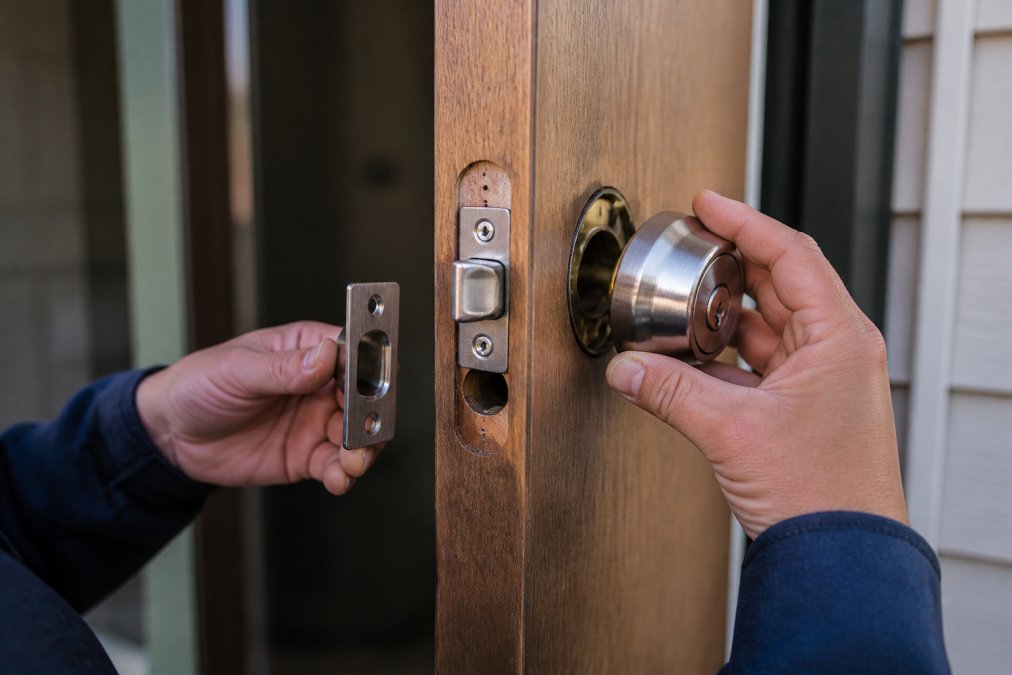
Installation is where most high security deadbolts fail. A perfectly engineered lock installed with short screws into hollow wood won’t stop a determined intruder. Professional installation ensures your strike plate is anchored into the door frame studs and your lock is aligned properly.
Key Features That Separate Top Residential Security Lock Brands
The best residential security lock brands share specific features that cheaper alternatives skip, requiring understanding both what the lock resists and how to maintain it over decades.
Pick Resistance and Drill Resistance
Pick resistance comes from a complex cylinder design that makes traditional lock picks ineffective. Standard keyways can be picked in seconds; complex keyways require specialized picks and significantly more time and skill.
Drill resistance uses hardened steel or anti-drill pins that damage, jam, or shatter when pressure is applied, preventing drill bits from reaching the lock mechanism.
The best residential security lock brands excel at both pick and drill resistance while remaining maintainable over time.
Weatherproof Design and Material Quality
Weatherproof design prevents corrosion and mechanical failure. The best residential security lock brands use stainless steel or nickel-plated brass with sealed internal components. In coastal or heavy-snow areas, weatherproofing is essential.
Material quality extends to the strike plate. Quality residential security lock brands include strike plates with long screws (typically 3 inches or longer) that anchor into the door frame studs, made from reinforced steel rather than thin stamped metal.
Material quality determines how long the lock remains serviceable. Brass cylinders can corrode in salt air; stainless steel resists corrosion but may be brittle; hardened steel resists drilling but may rust. Professional locksmiths recommend annual inspection and a light coat of graphite lubricant (never oil) to the keyway to prevent moisture and slow corrosion.
Mechanical Longevity and Cylinder Maintenance
A lock’s security rating tells you how it performs when new, not after five years of daily use. The best residential security lock brands use pin stacks and springs that maintain tolerances over time; cheaper locks use softer metals that wear and cause pins to bind.
Cylinder maintenance is the single most important factor in extending lock life. Dust, debris, and moisture accumulate inside the cylinder, causing friction and eventually jamming the lock. Professional locksmiths recommend:
- Annual inspection: Check that the key turns smoothly without resistance. If turning the key requires force, the cylinder needs cleaning.
- Graphite lubrication: Use only graphite powder or graphite spray (never oil-based lubricants, which attract dust). Apply sparingly to the keyway and work the key in and out 10-15 times to distribute the lubricant.
- Strike plate alignment: Verify the strike plate hasn’t shifted and that the bolt enters the strike cleanly without binding. Misalignment causes the bolt to drag, increasing wear on the cylinder.
- Seasonal checks in harsh climates: In areas with salt air, heavy snow, or extreme temperature swings, inspect the cylinder quarterly. Corrosion can develop quickly and is easier to address early.
A well-maintained mechanical lock from a quality brand can function reliably for 20+ years. A neglected lock from the same brand may fail in 5 years. This maintenance requirement is rarely mentioned in consumer guides, but it’s what separates locks that truly “last” from locks that merely “work until they don’t.”
Smart Lock Integration and Keyless Entry
Smart lock integration allows you to unlock your door from your phone, grant temporary access to guests, and monitor who enters your home. The best residential security lock brands offer smart locks that work with major home automation platforms. Keyless entry eliminates the need for physical keys while maintaining the mechanical security of a deadbolt. Extending this level of digital oversight to your perimeter requires secure garage door openers that synchronize seamlessly with your existing home automation ecosystem.
Battery life is the critical weakness of many smart locks. Quality brands use efficient electronics and large batteries that last 6-12 months between charges. Some models include emergency power options, a USB port or backup battery connector for situations where the main battery dies. Before choosing a smart lock, verify the battery replacement process is straightforward and that replacement batteries are readily available and affordable.
Professional Lock Installation Services: Why They Matter
Professional lock installation is where the best residential security lock brands actually deliver their value. A perfectly designed lock installed incorrectly is just an expensive piece of hardware on your door.
A professional installation includes measuring your door for the correct backset, ensuring the strike plate is anchored into the door frame studs, aligning the lock so it operates smoothly, and testing the lock under load. Finest Locksmith LLC has been installing locks since 2008. We know which doors have structural issues that affect lock performance and how to solve them.
Many homeowners try to install locks themselves to save money. Common mistakes include using short screws that don’t reach the frame studs, misaligning the lock so it binds, and failing to reinforce the strike plate. These mistakes turn an expensive residential security lock brand into a liability.
Mechanical Reliability vs. Electronic Features: What Lasts
Most guides pit mechanical locks against smart locks as a simple durability question: mechanical lasts longer, smart locks add convenience. That framing misses the real trade-off: security through obscurity versus security through encryption.
A mechanical deadbolt has no data to compromise. There’s no user database, no cloud connection, no digital record of who accessed your home or when. A quality mechanical lock will function for 20+ years with minimal maintenance, no batteries, no software patches, no internet dependency.
Electronic smart locks introduce a different security surface.
Common Mistakes Homeowners Make When Selecting Locks
The biggest mistake is prioritizing price over security. A lock that costs half as much usually offers half the security. You wouldn’t buy a cheap deadbolt for your car, your home deserves the same investment.
Frequently Asked Questions
What do locksmiths recommend for the best residential security lock brands?
Professional locksmiths prioritize ANSI Grade 1 deadbolts with pick-resistant and drill-resistant cylinders. Brands that meet or exceed ANSI standards, use solid brass or hardened steel construction, and feature reinforced strike plates are consistently recommended. Locksmiths also value locks with minimal moving parts for long-term mechanical reliability. The best choice depends on your door type and existing hardware compatibility, this is why professional lock installation services ensure proper fit and security.
How do I know if a residential security lock has good security ratings?
Check for ANSI certification, Grade 1 is the highest standard for residential locks, offering superior resistance to picking, drilling, and physical attacks. Look for locks tested against 100,000 cycles of use and certified by the American National Standards Institute. The lock’s keyway design, cylinder material, and strike plate reinforcement all affect its rating. When choosing a high security deadbolt, verify these certifications before purchase, or consult a locksmith to ensure you’re selecting equipment that meets current security standards.
Should I choose a smart lock or a traditional deadbolt for home security?
Traditional deadbolts offer proven mechanical reliability with no battery concerns or cybersecurity risks. Smart locks add convenience through keyless entry and remote monitoring, but depend on battery life and network connectivity. The best approach combines both: a high-security mechanical deadbolt as your primary lock with a smart lock on a secondary entry point if desired. Professional lock installation services can help you design a layered security strategy that matches your specific needs and door configuration.
What’s the difference between residential security lock brands in terms of durability?
Durability depends on material quality and mechanical design. Locks with solid brass or hardened steel cylinders resist weathering and physical attack better than cheaper alternatives. ANSI Grade 1 locks are tested for 100,000 use cycles. Weatherproof seals and corrosion-resistant finishes extend lifespan in outdoor conditions. Professional installation also affects longevity, improper installation can compromise even high-quality locks, so using professional lock installation services ensures your investment performs as intended.