

Table of Contents
- Why Door Damage Happens During a Lockout
- What to Do When Locked Out of Your House
- Non-Destructive Lockout Service: Your Best Option
- Lockout Prevention Tips for Homeowners
- When to Call a Professional Locksmith
- Damage Documentation and Insurance
- Frequently Asked Questions
Last Updated: October 18, 2026
Why Door Damage Happens During a Lockout
Getting locked out is stressful, and the panic to get back inside often leads homeowners to force entry, that’s when damage happens, making it essential to prevent door damage lockout through proper planning. Understanding how doors fail under pressure helps you avoid costly repairs and choose the right solution.

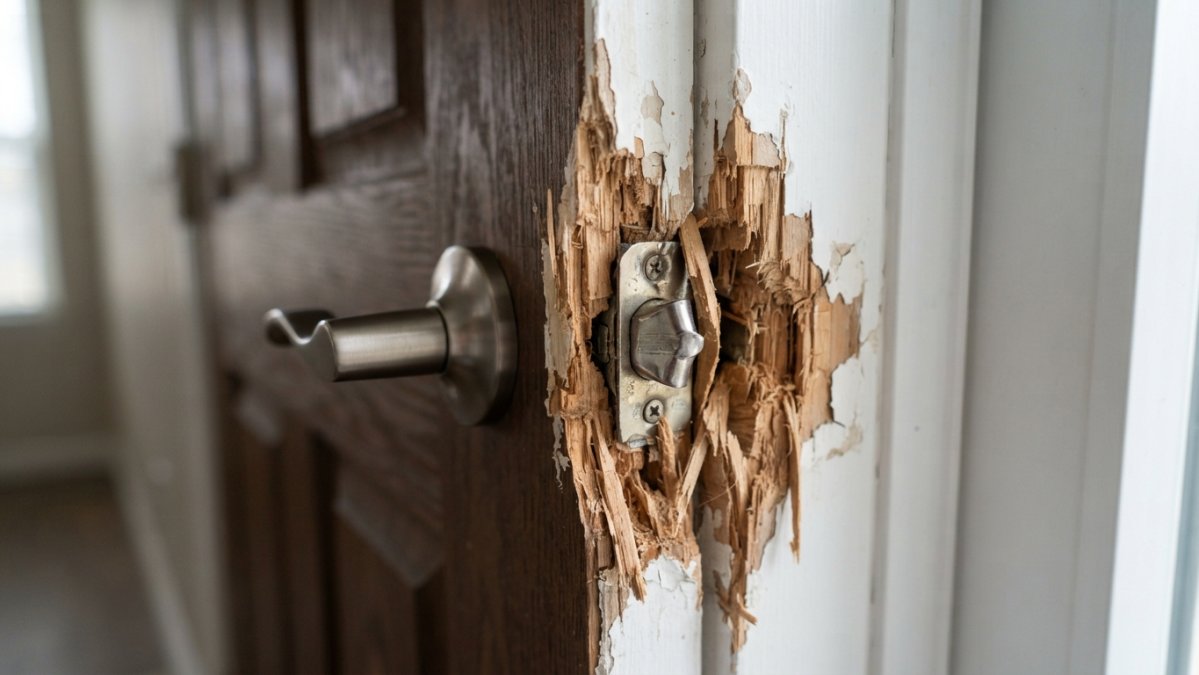
Common damage points on doors and frames
Your door has vulnerable spots. The deadbolt latch is the weakest point: apply force and it bends or breaks. The strike plate tears away from the wood, and the frame splinters around the latch hole.
The door edge suffers too. Prying tools damage the trim and paint, and once the paint seal breaks, moisture enters the wood and rot sets in fast.
Here’s what happens when force is applied:
- Deadbolt latch bends or snaps
- Strike plate pulls away from frame
- Door frame wood splinters and cracks
- Door edge paint chips and peels
- Trim warps or breaks
- Lock mechanism becomes misaligned
Each issue requires separate repairs, turning a simple lockout into a multi-part restoration project.
Why forcing entry causes costly repairs
Forcing a door open seems quick, but the damage is immediate and expensive to fix.
A bent deadbolt requires lock replacement; a damaged strike plate means new hardware and frame repair. Splintered wood needs filling, sanding, and refinishing, and paint damage requires matching and repainting the door or frame.
Carpenters, locksmiths, and painters all charge for their part, so what started as a lockout now costs hundreds in repairs.
The real problem: once the door structure is compromised, security is too. A damaged frame makes your door easier to break into later, you’ve created a security risk while solving an access problem.
What to Do When Locked Out of Your House
The moment you realize you’re locked out, pause. Don’t reach for a pry bar. Take these steps first to protect your door and frame.
Immediate steps to take before attempting entry
Call a professional locksmith immediately, the fastest way to regain access without damage. A licensed locksmith has the tools and training to open your door safely without harming the deadbolt, frame, or trim.
While waiting for help, try these safe alternatives:
- Check all doors and windows for unlocked entry points
- Call a family member or roommate who has a key
- Check if you left a spare key with a trusted neighbor
- Review whether you have a hidden spare key outside
- Contact your landlord or property manager if renting
Do not force the door with screwdrivers, pry bars, hammers, or kicks, every one of these damages the lock mechanism or frame.
If you’re locked out of your car, the same rules apply. Professional auto locksmiths can open your vehicle without damaging the door, window, or lock assembly.
Safe alternatives to forcing the door open
Forcing entry should be your last resort, not your first choice.
Call a professional locksmith. The safest option: locksmiths have specialized equipment designed to open locks without damage and usually arrive within 30-60 minutes for emergency calls. Finest Locksmith LLC offers 24/7 emergency lockout service with flat-rate pricing, so you know the cost upfront.
Contact your landlord or property manager. If you rent, your landlord may have a spare key or can authorize entry.
Wait for a family member. If someone else in your household has a key, waiting for them to arrive is free and safe.
Check for unlocked entry points. An unlocked window or back door solves the lockout without any damage.
Use a spare key. If you keep a spare hidden outside, retrieve it. Spare keys are cheap insurance against lockouts.
These alternatives cost little or nothing; forcing entry costs hundreds in repairs and creates security vulnerabilities.
Non-Destructive Lockout Service: Your Best Option
Professional lockout service exists for exactly this reason: locksmiths are trained to open doors without damage.
How professional locksmiths prevent door damage
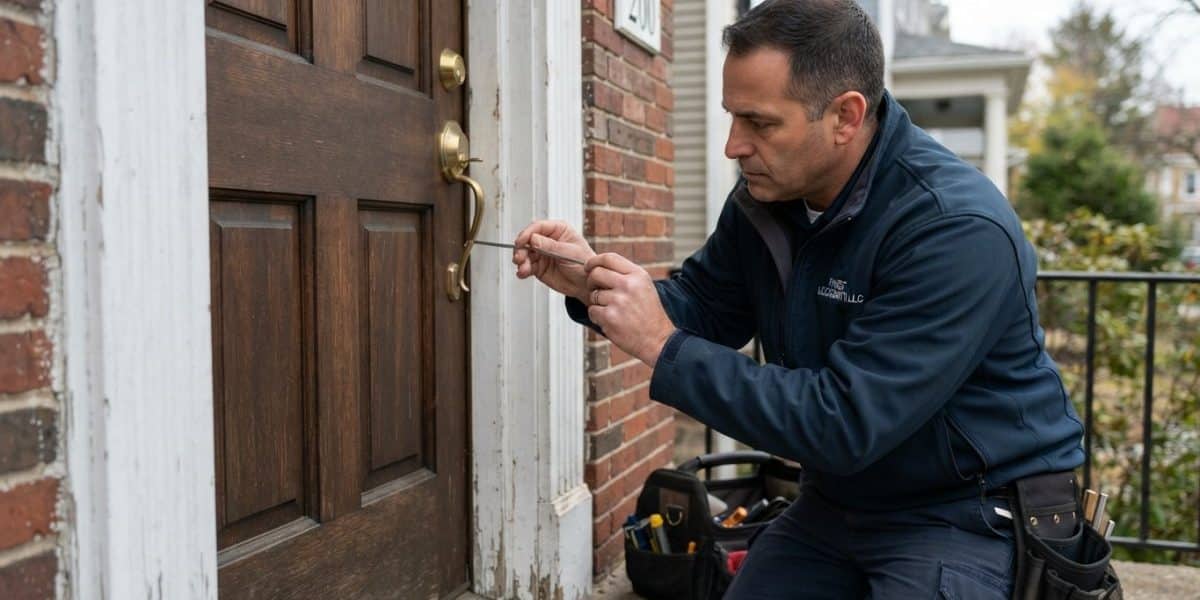
Licensed locksmiths use specialized tools designed to prevent door damage lockout by opening locks without force, no prying doors or kicking frames, just manipulating the lock mechanism itself.
A locksmith uses tension tools and picks to align the lock pins, opening the lock cleanly so the door, frame, and lock mechanism stay intact.
Emergency locksmiths carry multiple tools for different lock types, assess your specific lock, and choose the right technique, expertise that prevents the damage DIY attempts cause.
When you call a professional, you’re paying for skill that saves you hundreds in repairs. A lockout service call costs far less than repairing a damaged frame, replacing a broken deadbolt, and refinishing paint.
Why DIY attempts cost more in repairs
The temptation to force entry yourself is strong. You’re locked out. You want back in now.
It’s not. DIY attempts almost always cause damage:
You lack specialized tools. Screwdrivers and pry bars are crude compared to locksmith picks. They damage wood and metal.
You lack training. You don’t know how locks work internally. Your attempts to manipulate the mechanism fail. Frustration builds. Force increases. Damage multiplies.
You can’t see inside the lock. Locksmiths use visual inspection and feel to guide their tools. You’re working blind, guessing where to apply pressure.
The result: bent locks, splintered frames, chipped paint, damaged trim. Now you need a locksmith anyway, plus a carpenter, plus a painter.
Finest Locksmith LLC‘s experienced technicians arrive quickly and handle the situation correctly the first time. You avoid the repair cascade that DIY attempts trigger.
Lockout Prevention Tips for Homeowners
The best lockout is the one that never happens. These strategies prevent future lockouts and keep your doors secure.
Key management and backup access strategies
Spare keys are your first line of defense. Keep multiple spares in different locations.
Give a spare to a trusted neighbor or family member. This person can let you in during a lockout.
Store a spare in a secure lockbox outside your home.
Never hide keys under doormats or flowerpots. These are the first places burglars check. Hide spares in less obvious locations.
Keep a spare at work in a secure drawer. If you’re locked out, you can retrieve it during business hours.
Consider giving spares to a parent or adult child who lives nearby. They can help in an emergency.
Document your spare key locations. Write them down and store the list somewhere safe.
Smart locks and autolock features to avoid future lockouts
Modern locks offer solutions that prevent lockouts entirely.
Smart locks with keypad entry. You can unlock your door using a code instead of a key. No key means no lost key.
Smart locks with smartphone access. Some locks connect to your phone. You can unlock your door from anywhere. If you’re locked out, you unlock remotely.
Autolock features. Some smart locks have autolock settings. Your door locks automatically after a set time.
Keyless entry systems. Fingerprint locks, facial recognition locks, and other biometric systems eliminate keys entirely. You can’t lose what you don’t have.
Deadbolts with interior override. Some deadbolts have a feature that lets you open them from inside even if the exterior is locked.
These technologies cost more upfront but save you from lockout stress and damage prevention costs. Finest Locksmith LLC can advise you on smart lock options that fit your security needs and budget.
When to Call a Professional Locksmith
Knowing when to call a professional saves you time, money, and frustration. Here’s how to recognize the situation.
Signs you need immediate professional help
Call a locksmith immediately if you’re locked out and have no safe way to regain access.
Call immediately if you’re locked out in bad weather. Cold, heat, rain, or snow make waiting dangerous.
Call if you’re locked out with children or pets inside. Your priority is getting back in safely.
Call if you’re locked out of your car and need to leave soon. You have somewhere to be.
Call if you’re locked out of a commercial property. Businesses can’t afford downtime.
Call if you’ve already tried to force entry and caused damage. Stop trying. Call a professional.
Call if you’re locked out at night or on a weekend. Finest Locksmith LLC offers 24/7 emergency service.
What to expect from a licensed locksmith visit
A professional locksmith arrives with tools and expertise. Here’s what happens:
The locksmith assesses your lock and door. They examine the lock type, the door material, and the frame condition. This assessment takes a few minutes.
They explain the approach they’ll use to open your door.
They open your door using non-destructive methods. This takes 5-15 minutes depending on lock complexity.
They verify the lock works after opening. They test it to make sure it functions properly.
They discuss any damage they notice.
They provide a receipt with a flat rate price. No surprise charges. No hidden fees. You know the cost upfront.
They answer questions about lock maintenance, security upgrades, or spare key management.
A professional visit is fast, transparent, and damage-free. You regain access without the stress and expense of DIY attempts or repair costs.
Damage Documentation and Insurance
If door damage does occur, proper documentation protects you. Insurance may cover lockout-related damage in some cases.
How to document damage for insurance claims
Take clear photos of all damage immediately. Photograph the deadbolt, frame, door edge, trim, and paint damage.
Write down what happened. Include the date, time, and cause of the lockout.
Get repair estimates from professionals. Contact a locksmith for lock repair or replacement costs. Contact a carpenter for frame damage.
Keep all receipts and invoices from repairs. These documents prove the cost of damage.
Photograph repairs as they’re completed. This shows the extent of work needed.
Document the timeline. Write down when the lockout occurred, when you called for help, when repairs were completed.
Contact your insurance company promptly. Report the damage and provide all documentation.
When lockout damage is covered by homeowners insurance
Most homeowners insurance policies cover accidental damage to your home.
If you forced entry yourself and caused damage, your policy may not cover it.
If a locksmith caused damage while opening your door, their liability insurance typically covers it. This is why hiring a professional matters.
If damage occurred during a break-in or attempted break-in, your insurance may cover it.
Review your specific policy. Call your insurance agent and ask whether lockout-related damage is covered. Ask about your deductible.
Different policies have different coverage. Some cover accidental lock damage. Some don’t.
Getting locked out of your house is frustrating, but forcing entry makes it worse.
When you’re locked out, call Finest Locksmith LLC.
Frequently Asked Questions
Can a locksmith unlock a door without damaging it?
Yes. Professional locksmiths use specialized tools and techniques designed to open locks without forcing the door, damaging the frame, or breaking the deadbolt. Non-destructive methods preserve your door’s integrity and avoid costly repairs. Licensed locksmiths have the training and equipment to access your home safely while protecting the door and trim from impact or splintering.
What should I do first when locked out of my house?
Check all entry points for unlocked windows or doors before attempting any forced entry. Call a trusted locksmith immediately rather than trying to force the lock yourself. While waiting, stay in a safe location. Avoid prying at the door with tools, as this causes frame damage, broken latches, and splintered wood. Professional help arrives quickly and costs far less than repairing forced-entry damage.
How can I reduce the chance of getting locked out again?
Keep a spare key with a trusted neighbor, family member, or in a secure lockbox. Install a smart lock with keypad or mobile app access for emergencies. Use a deadbolt with an autolock feature that allows manual override from inside. Establish a routine check before leaving home. Consider a keyless entry system for added convenience and security without the lockout risk.
What parts of a door can be damaged during a lockout?
The deadbolt, strike plate, door frame, and latch are most vulnerable to damage. Forcing the door can splinter the frame, bend or break the latch mechanism, crack the trim, and damage the paint or finish. The door edge itself may split if pried with tools. Even minor damage affects security and requires professional repair. Professional locksmith tools protect all these components while gaining safe entry.