

Last Updated: November 7, 2026
Quick Summary
Emergency locksmith services in the United States typically cost between $123 and $275 for a visit, according to Thumbtack’s locksmith pricing guide, and emergency service specifically runs $150 to $250. That range is a benchmark rather than a quote, so ask for a written total before any work begins.
- The call-out fee typically runs $50 to $150 on top of the hourly rate.
- Emergency hourly rates average $150 to $250, compared with about $50 to $100 during regular hours.
- Rekeying costs less than full lock replacement and suits cases where the hardware is still sound.
- Ask whether a quote is all-in or excludes parts and after-hours surcharges.
- Compare quotes only after normalizing them to the same arrival window and scope of work.
Table of Contents
- What Emergency Locksmith Services Typically Cost
- Emergency Locksmith Call-Out Fee: What It Covers
- Cost of Emergency Locksmith Services Per Hour
- How Much a Locksmith Charges to Unlock a Door
- Lock Rekeying vs. Lock Replacement Cost
- How Time of Day and Urgency Change the Final Bill
- Reading an Itemized Bill and Spotting Quote Red Flags
- Booking Your Emergency Call With Finest Locksmith LLC
- Frequently Asked Questions
What Emergency Locksmith Services Typically Cost
Most emergency locksmith visits in the United States fall somewhere between $123 and $275, according to Thumbtack’s locksmith pricing guide (Thumbtack Locksmith Pricing Guide). The same guide puts emergency service specifically at $150 to $250. That range is a useful benchmark, but it is not a quote, and the final figure on your bill depends on several factors.
If you are locked out and need a fast answer, start with the components of the bill rather than the headline number. Ask what is included, what is extra, and whether the total is fixed before anyone starts work. Ask any provider, including Finest Locksmith LLC, for a written total before work begins.
The table below sums up the benchmark prices cited in this section so you can compare them at a glance.
| Item | Value | Note |
|---|---|---|
| Typical emergency visit (US) | $123 to $275 | Thumbtack locksmith pricing guide |
| Emergency service specifically | $150 to $250 | Thumbtack locksmith pricing guide |
| Benchmark is not a quote | Final bill varies | Depends on several factors |
Emergency Locksmith Call-Out Fee: What It Covers
A call-out fee is the charge for dispatching a technician to your location. It is separate from the work itself. According to HomeGuide’s locksmith cost guide, the service-call fee typically runs $50 to $150 on top of the hourly rate (HomeGuide Locksmith Cost Guide).
The call-out fee covers travel time, fuel, and the cost of getting a trained technician to you in a timely way. It does not usually cover the lock work itself. Watch for quotes that list only a low hourly rate and leave the call-out fee out. Those quotes tend to produce larger bills than expected.
Cost of Emergency Locksmith Services Per Hour
Emergency hourly rates are higher than regular-hours rates. HomeGuide reports emergency locksmith prices averaging $150 to $250 per hour (HomeGuide Locksmith Cost Guide). GV Lock’s cost guide compares that with roughly $50 to $100 per hour during regular hours (GV Lock Locksmith Cost Guide).
An hourly rate only matters once you know how long the job will take. A simple lockout often takes a short time, while a lock that needs drilling or replacing takes longer. Ask for an estimate of total time along with the rate.
How Much a Locksmith Charges to Unlock a Door
For a standard residential lockout, the work is usually brief, and your exact total depends on the lock type and time of day.
Damage-free entry is the goal for most lockouts, and if a lock must be drilled, the technician should explain that before proceeding and quote the added cost.
Lock Rekeying vs. Lock Replacement Cost
Rekeying changes the internal pins so your existing lock works with new keys, and it costs less than a full replacement. Replacement installs a new lock entirely, which makes sense when the lock is damaged, worn, or outdated.
Rekeying is often the better choice after a move or a lost key, when the hardware is still sound. Replacement is the better choice when the lock fails, when you want a higher security grade, or when you need to match a new keyway. Ask the technician to explain which option fits your situation and what each will cost before any work starts.
How Time of Day and Urgency Change the Final Bill
Time of day and urgency are two separate price levers, and quotes that blend them are hard to compare. Time of day refers to when the work happens, regular business hours, evening, overnight, weekend, or holiday. Urgency refers to how fast you need a technician on site, immediate dispatch, a priority window of a few hours, or a scheduled same-day or next-day appointment. A 2 AM immediate call stacks both levers; a 10 AM scheduled appointment the next morning usually carries neither.
Emergency or after-hours calls often carry a surcharge on top of the base service charge, so ask which charges the quoted number includes. A common pattern is a base rate quoted for regular hours, with an evening or overnight multiplier applied to labor and a flat after-hours fee added once. When you request a quote, state the time you actually need service and ask for the all-in figure for that time, not the daytime rate.
Response time works the same way. Immediate dispatch typically carries a premium because the technician is pulled from another job or dispatched outside a normal route. A priority window of a few hours is usually priced between immediate dispatch and a scheduled appointment. A scheduled same-day or next-morning visit is generally the least expensive option because the technician can route it efficiently. If your situation allows a short wait, you have a safe place to stay, or the lockout is at a secondary door, a scheduled visit can meaningfully reduce the total.
Holidays are their own category. Many operators apply a holiday rate on top of the weekend rate, and the definition of a holiday varies by company. Ask specifically whether the date you need is billed at the holiday rate before you approve the dispatch.
Watch out: a quote that sounds low for an overnight call may exclude the after-hours surcharge or assume a scheduled arrival time you did not request. Confirm the arrival window and the all-in price for that window in writing before the technician is dispatched.
If you are comparing two quotes, normalize them to the same arrival window and the same scope of work, for example, a standard residential lockout with damage-free entry, before you decide. Our 24-hour emergency locksmith availability guide explains how after-hours pricing and dispatch windows work in more detail.
Reading an Itemized Bill and Spotting Quote Red Flags
A fair emergency locksmith bill separates each charge so you can match it to the quote you approved. Our guide to avoiding hidden locksmith service fees shows how to check each line before you pay. Most practitioners structure an emergency invoice around four lines: the call-out or trip fee, labor (often billed as a minimum service charge plus time beyond that minimum), parts (locks, cylinders, keys, or hardware), and any after-hours or urgency surcharge. When those four lines are visible, you can compare two quotes on equal terms instead of comparing a headline number against a bundled total.

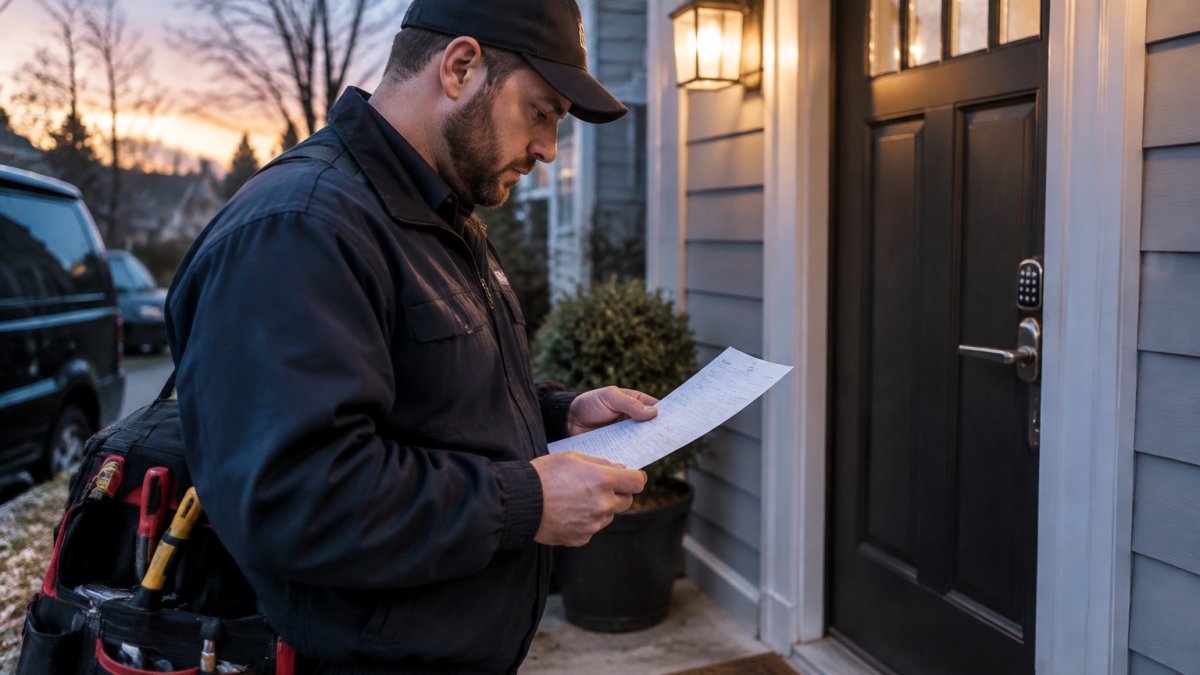
Here is how the components typically stack in a residential lockout scenario. The call-out fee covers dispatch and travel. The labor line covers the technician’s time on the door, usually with a minimum charge that applies even if the job takes only a few minutes. If the door is opened without damage, there may be no parts line at all. If drilling is required, the parts line should show the replacement cylinder or lock, and the labor line should reflect the added time. An after-hours surcharge, if it applies, appears as its own line rather than being folded into labor.
A common pattern in complaint reports is a low advertised number that turns out to be the call-out fee only, with labor and parts added on arrival. To protect yourself, ask for a written estimate before work begins that states whether the quoted figure is all-in or excludes parts and after-hours charges. Confirm the business identity, company name, license or registration where your state requires one, and a physical address, before you authorize work. A legitimate operator will not refuse to put the estimate in writing.
Watch out: if the technician arrives in an unmarked vehicle, cannot produce a company identifier, or demands cash before explaining the diagnosis, stop and ask for the written estimate again before any drilling or replacement is authorized.
If the final bill does not match the approved estimate, ask for the difference itemized in writing before you pay. Keep the estimate, the invoice, and any text or email confirmation together; those documents are what you will need if you later dispute the charge with your card issuer or pursue reimbursement through insurance or a roadside assistance plan. Our guide to avoiding hidden locksmith service fees walks through a line-by-line bill check.
Booking Your Emergency Call With Finest Locksmith LLC
Finest Locksmith LLC has provided residential, commercial, and automotive locksmith services in the Greater Boston area since 2008. We offer 24/7 emergency lockout assistance and a flat price for emergency services. Our experienced technicians can explain your options before any drilling or replacement.
For a home lockout, call our residential line to book an emergency visit. For business premises, our commercial service covers lock installation, master key systems, and access control. If you want a price before committing, request a quote from Finest Locksmith LLC and we will give you an estimate for your situation.
Our Watertown location is in front of the RMV. Call now to reach a technician.
Frequently Asked Questions
How much should an emergency locksmith cost?
Emergency locksmith pricing varies with the job, the time of day, and the provider. Pricing depends on the job, the time of day, and the provider, so ask for a written total before the technician starts work.
Is it cheaper to replace locks or rekey them?
Rekeying is usually the less expensive option because the technician changes the internal pins so your existing key works with a new combination, without replacing the hardware. Full lock replacement costs more because it includes the new hardware and installation labor. Rekeying suits a lost key or a move-in situation, while replacement suits a damaged lock or a higher security need.
Why are emergency locksmiths more expensive?
Emergency calls cost more because the technician is dispatched on short notice, often at night, weekends, or holidays, and the work is unscheduled. Urgency-based pricing reflects that disruption. Asking for the emergency surcharge in writing before booking helps you compare providers on the same terms.
How much does a locksmith charge to unlock a door?
A lockout is usually billed as a service call plus labor, and the total depends on the lock type, whether the door can be opened without damage, and the time of day. Confirm whether the quoted price covers entry only, or whether any replacement hardware is extra.

