
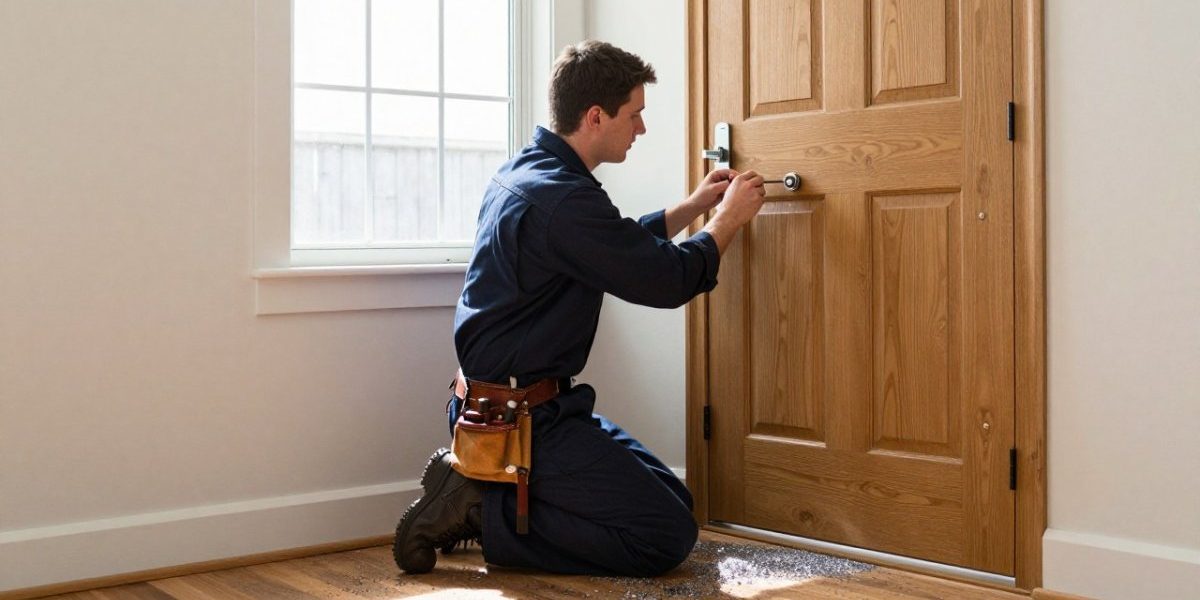
Last Updated: November 14, 2026
Quick Summary
Improving door security starts with the frame, not the lock, because burglars usually kick or pry a door at the weakest point. Replace short strike plate screws with longer screws that reach the framing, add a Grade 1 or Grade 2 deadbolt with a bolt that extends at least one inch into the frame, and secure hinges and inward-opening doors with a door security bar or hinge bolts.
- Replace short strike plate screws with 3-inch screws that reach the framing stud.
- Install a Grade 1 or Grade 2 deadbolt rated under ANSI/BHMA A156.5 for exterior doors.
- Make sure the deadbolt bolt extends at least one inch into the frame.
- Use hinge bolts or security hinges where hinge pins are exposed to the outside.
- Test every lock monthly and re-tighten strike plate and hinge screws twice a year.
Table of Contents
- Why Your Front Door Is the Weakest Point in Your Home Security
- Inspecting Your Door, Frame and Overall Condition
- Upgrading Locks, Deadbolts and Multi-Point Locking Systems
- Reinforcing Strike Plates, Door Jambs and Frames With Longer Screws
- How to Secure Front Door From Inside: Hinges, Door Security Bars and Locks
- Extra Security for Front Door Apartments and Rear or Patio Doors
- How to Secure Front Door From Break-Ins: Budget Tiers, Smart Locks and Maintenance
- Booking Your Next Step: Getting an Entry-Point Security Check in Greater Boston
- Frequently Asked Questions
Why Your Front Door Is the Weakest Point in Your Home Security
Most burglars never pick a lock. They look for a door that gives way when pushed, a strike plate held by two short screws, or a hinge they can reach from outside.
The same pattern appears often in residential doors: the lock is frequently fine, but the frame around it is not.
Door security depends on three things working together: the lock, the strike plate and frame that receive the bolt, and the hinges that hold the door in place. A strong deadbolt cannot protect a door that a forced shoulder can split away from its frame.
Start with the frame. A solid lock on a splintered jamb is still an easy entry point, so the upgrades below follow that order.
Inspecting Your Door, Frame and Overall Condition
Before buying anything, check what you already have. A five-minute inspection tells you whether a lock upgrade will help or whether the frame needs attention first.
Look at these points:
- Gaps and alignment. The door should close evenly with a consistent gap around the edges. A door that rubs at the top or bottom may have a sagging frame.
- Strike plate screws. Remove one screw and check whether it reaches solid wood framing. Short screws that only reach the trim are a common weak spot.
- Wood condition. Press along the jamb near the lock. Soft, cracked, or split wood needs repair before new hardware goes in.
Watch out: do not fix a stripped screw hole with a bigger screw. Fill it with wood glue and a dowel or hardwood filler, let it cure, then drill a pilot hole before installing the longer screw. Read about fast residential lock repair options in Boston if the frame damage is more serious.
- Door closes evenly with no rubbing
- Strike plate screws reach solid framing
- No soft, split, or cracked wood at the lock side
Upgrading Locks, Deadbolts and Multi-Point Locking Systems
A handle lock alone is a weak barrier. Most homes benefit from a deadbolt whose bolt extends at least one inch into the frame. Single-cylinder deadbolts are standard for exterior doors; double-cylinder models need a key on both sides, which can create a fire-escape problem, so check local code first. Compare top-rated residential security lock brands before choosing one.
Before you buy, measure three things so the hardware fits:
- Backset. The distance from the door edge to the center of the bore hole. Most residential doors use a 2-3/8-inch or 2-3/4-inch backset; the wrong one means the bolt will not line up with the strike.
- Bore hole diameter. Standard deadbolt bores are 2-1/8 inches. A smaller hole needs a step drill or a locksmith; do not force a larger cylinder into a smaller hole.
- Door thickness. Most deadbolts fit 1-3/8-inch to 1-3/4-inch doors. A thicker door needs a kit or different model, and a hollow-core door cannot hold a deadbolt at all.
Reading the Grade Rating
Deadbolts sold in the United States are commonly rated under ANSI/BHMA A156.5 as Grade 1, Grade 2, or Grade 3. Grade 1 is the highest and what most locksmiths recommend for an exterior door; Grade 3 is the builder-grade hardware often installed on new homes. The grade reflects cycle testing, bolt strength, and resistance to forced entry, making it a more useful comparison than brand name.
Matching the Lock to the Door Material
- Wood doors. A solid-core or solid-wood door takes a standard deadbolt well. A hollow-core door does not; the bolt has nothing to anchor into, and the face will crush under force.
- Steel doors. Most have an internal lock block or reinforcement plate. Confirm the block is present before installing; if missing, add a reinforcement plate behind the deadbolt.
- Fiberglass and composite doors. These often have a wood or composite lock rail. Check that the rail is at least 1-3/4 inches thick where the deadbolt sits.
Multi-Point Locking Systems
Multi-point locks engage the door at several points along its height, usually top, middle, and bottom, spreading forced-entry force across the frame instead of concentrating it at the handle. They are common on composite and steel doors and worth considering for a front door with glass panels or a long lock stile. The trade-off: multi-point hardware is model-specific, so retrofitting usually requires a qualified installer and may not be possible at all, and replacement parts can be slow to source.
Smart Locks and Compatibility
A smart lock is only as strong as its mechanical bolt and cylinder. Before buying, confirm it fits your backset, bore, and door thickness, and check whether it needs a separate hub or bridge for remote access. Keep a mechanical key or keypad code as a backup for power or network failure, and confirm the lock has a physical override.
| Upgrade | Best for | Relative effectiveness | Typical installation |
|---|---|---|---|
| Grade 1 single-cylinder deadbolt | Most wood and steel doors | High when paired with a solid frame | Simple, one afternoon |
| Multi-point lock | Composite, steel, or tall doors | Very high | Requires a qualified installer |
| Smart lock | Keyless entry needs | Depends on the bolt and cylinder | Often DIY, but check compatibility |
Choosing a Deadbolt or Anti-Snap Cylinder
Look for a deadbolt rated by a recognized testing standard, and check the bolt throw and cylinder design. Anti-snap cylinders, sometimes called anti-bump or anti-pick, help against common attack methods, but no cylinder stops a determined attacker who has time.
A common mistake is buying a high-security cylinder and keeping a cheap, short-screw strike plate: the lock holds, but the frame splits first.
Reinforcing Strike Plates, Door Jambs and Frames With Longer Screws
The strike plate is the metal piece on the frame that the deadbolt slides into.
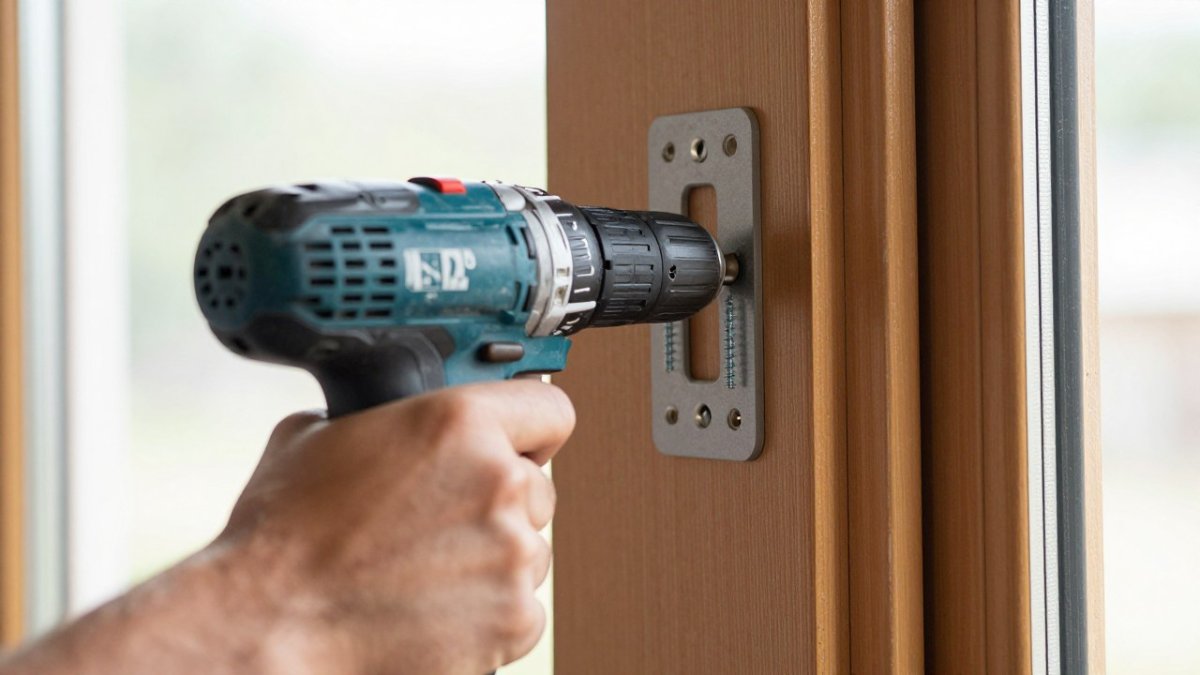
The fix is a reinforced strike plate with long screws that reach through the jamb into the stud behind it.
Steps to reinforce the strike plate:
- Remove the existing strike plate and check the hole depth.
- Choose a reinforced plate with a wide, solid base.
- Drill pilot holes into the framing, not just the trim.
- Install long screws through each hole, including the existing ones.
- Test the door by closing and locking it firmly.
Watch out: a door that binds after adding longer screws may need the strike plate repositioned slightly. Forcing it can damage the bolt and the jamb.
How to Secure Front Door From Inside: Hinges, Door Security Bars and Locks
Hinge-side attacks are easy to overlook. If someone can reach the hinge pins from outside, they can lift the door out of its frame.
A door security bar is a metal bar that sits in a bracket and braces the door against the floor or frame from the inside.
Some options to consider for the inside of the door:
- Hinge bolts or security hinges for the outside-facing side
- A door security bar for inward-opening doors
- A sash jammer for sliding patio or side doors
Check fire-escape requirements before installing any device that needs a key to exit.
Extra Security for Front Door Apartments and Rear or Patio Doors
Apartment doors often have limited options because you may need landlord approval before changing hardware. Ask before drilling or replacing a lock, and keep records of any approved changes.
Rear and patio doors need separate attention. A sliding patio door can be lifted off its track, so a sash jammer or security pin in the track helps prevent that.
Also check side doors, garage access doors, and basement doors. Treat each as a separate door with its own frame and lock.
How to Secure Front Door From Break-Ins: Budget Tiers, Smart Locks and Maintenance
You do not need to spend a lot to get meaningful improvement. Plan in tiers, starting with the changes that cost the least and block the most common attacks: frame and strike plate first, the lock second, convenience features last.
Tier 1: Low-Cost, High-Impact (Under $50 in Parts)
These steps address the attacks burglars actually use: kicking, shoulder-charging, and prying.
- Replace the short strike plate screws with 3-inch screws that reach the framing stud. This is the single highest-value change for most doors.
- Add a reinforced strike plate with a wide base if the existing plate is thin builder-grade metal.
- Tighten or replace loose hinge screws, and fill stripped holes with wood glue and a dowel before re-driving.
Tier 2: Moderate Cost ($50-$200 in Parts)
- Install a Grade 1 or Grade 2 deadbolt if the existing lock is builder-grade or the bolt throw is short.
- Replace damaged jamb wood or add a jamb reinforcement plate where the strike sits.
- Add hinge bolts or security hinges on doors where the hinge pins are exposed to the outside.
Tier 3: Higher Cost (Professional Installation)
- Add a multi-point lock or a steel security door where the door or frame is the weak point.
- Have a professional align and reinforce the frame, especially on older homes where the jamb has moved.
- Replace a hollow-core or damaged door with a solid-core or steel door.
A risk-based way to choose: if your door is solid and the frame is sound, spend on the lock and strike plate. If the frame is soft or split, spend on the frame first, because a better lock will not help a jamb that pulls apart.
Smart Locks: Convenience With Trade-Offs
Use a strong, unique password on the associated account, keep the firmware updated, and confirm the lock still has a mechanical key or keypad code for power failures. Check that it fits your backset and door thickness before buying, and keep a physical key as a backup. A smart lock with weak mechanical hardware gives no real advantage over a well-built traditional lock.
Maintenance Schedule
- Test every lock monthly by locking and unlocking it, and confirm the bolt fully extends into the strike.
- Check strike plate and hinge screws twice a year, and re-tighten any that have loosened.
- Lubricate the cylinder with graphite powder, not oil, once a year. Oil attracts dust and can gum up the pins.
Pricing for locks, hardware, and installation depends on the door type, the lock brand and features, and the complexity of the job. Visit the Finest Locksmith LLC website or call for a quote on your specific door. Explore residential locksmith services for professional installation help.
Booking Your Next Step: Getting an Entry-Point Security Check in Greater Boston
If you have worked through the inspection checklist and found a problem you are not sure how to fix, a professional check is the fastest way to know where to start. Finest Locksmith LLC has served the Greater Boston area since 2008, providing residential, commercial, and automotive locksmith services, including 24/7 emergency lockout assistance. Call now to ask about a residential security check of your door, frame, and hardware.
Frequently Asked Questions
How can I make my doors more secure?
Start with the basics: replace a standard latch with a deadbolt that has at least a one-inch throw, swap short screws in the strike plate and hinges for three-inch screws that reach the framing, and make sure the door closes and aligns without forcing. Installing a reinforced strike plate and protecting the hinge side are two of the most effective low-cost upgrades. Pricing depends on the hardware you choose and the work required, so ask Finest Locksmith LLC for a quote before buying parts.
How do I secure a front door from the inside?
Use a deadbolt you can operate from inside, keep the key accessible but out of view of the door, and add a door security bar or sliding bolt for extra resistance against kick-ins. Check that the hinges are on the inside or protected with hinge security pins if they face outward. A secure inside setup works best when the frame and strike plate are also reinforced, because a strong lock does little if the frame splits.
Do door security bars actually work?
Door security bars can slow a forced entry attempt, but they only work when they are rated for the door’s construction and anchored to a solid surface. A bar fitted to a weak frame can fail under pressure, so pair it with a reinforced strike plate and longer screws. Treat a bar as one layer of a multi-layer plan rather than a replacement for a quality deadbolt.
When should I replace or upgrade a door lock?
Replace a lock when the key is worn or hard to turn, when the bolt does not extend fully, or after you move into a home or lose a key. Upgrade to a higher-security cylinder or a multi-point system when the door is exposed to the street, when it has glass nearby, or when you want resistance against picking and bumping. Contact Finest Locksmith LLC to discuss your current hardware and options.
