
Table of Contents
- When Your Residential Lock Stops Working: First Steps
- Jammed Door Lock Repair: Diagnosis and Solutions
- Repair vs. Replacement: Making the Right Call
- Residential Lock Repair Cost: What to Expect
- How Long Does Lock Replacement Take?
- How to Choose a Residential Locksmith You Can Trust
- Emergency Lockout Assistance: What to Do Right Now
- Frequently Asked Questions
Last Updated: October 5, 2026
When Your Residential Lock Stops Working: First Steps
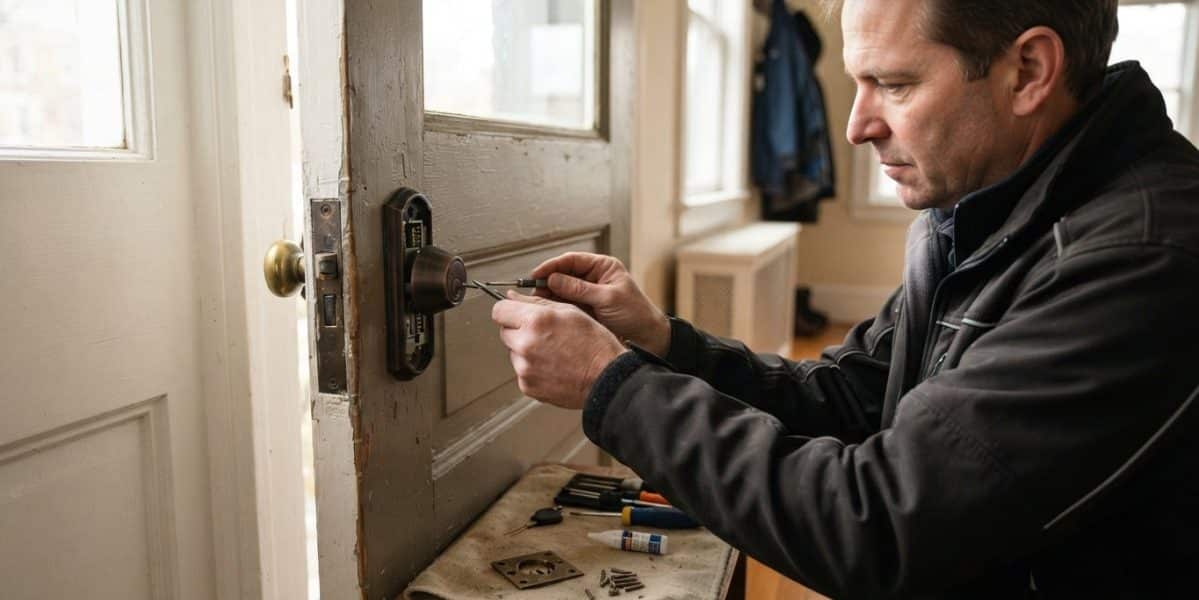
A jammed or broken lock doesn’t always require an immediate service call. At Finest Locksmith LLC, we recommend troubleshooting first, a few quick checks can save time and money.
Lock troubleshooting before you call
Start by examining what’s happening. Does the key turn partway and stick, not turn at all, or does the handle move without opening the door? These point to different problems.
Try lubricating the lock cylinder with graphite powder or silicone-based lubricant. Work your key in and out gently for 30 seconds. Avoid oil-based lubricants, which attract dirt.
Check the deadbolt alignment. If the strike plate is bent or misaligned, the bolt won’t retract smoothly even if the mechanism works.
Test the key itself. If a spare key works, your original is worn or damaged and you need key replacement, not lock repair.
Signs your lock needs professional attention
Some issues require a locksmith’s expertise. If lubrication fails and the key still won’t turn, or it turns but the bolt won’t move, the lock cylinder is damaged internally. Forcing it risks breaking the key inside.
A lock that becomes very loose or rattles when you move the handle suggests the internal mechanism has failed, meaning replacement is likely your only option.
Water damage is common in older homes or after heavy rain. If your lock has been exposed to moisture and won’t operate smoothly, don’t force it, call for residential lock repair service before corrosion spreads.
Jammed Door Lock Repair: Diagnosis and Solutions
A jammed lock is frustrating, but understanding the cause determines whether repair or replacement is necessary. Finest Locksmith LLC sees this frequently, and the fix depends on the root cause.
What causes a lock to jam
The most common cause is dirt and debris buildup inside the lock cylinder.
A broken key left inside the lock is another frequent cause.
Weather exposure causes rust and corrosion, especially in coastal areas or during freeze-thaw cycles. Moisture enters the lock, the metal oxidizes, and the mechanism seizes; salt air accelerates this.
Misalignment happens when the door frame settles or shifts, so the bolt no longer lines up with the strike plate and the lock feels stuck even though the mechanism works.
When jamming means replacement
If the lock has been jammed for months, internal damage is likely extensive, the longer it sits unused, the more corrosion develops. Repair costs then approach replacement costs, making replacement the practical choice.
A lock that jams intermittently but still functions is a repair candidate, a locksmith can disassemble, clean, and reassemble it.
Consider the lock’s age. Residential locks typically last 10-15 years with normal use. If yours is older and failing, replacement is more reliable, a new lock costs less than multiple service calls on an aging one.
Repair vs. Replacement: Making the Right Call
The decision between repairing and replacing a broken lock depends on cost, age, and the extent of damage.
Cost and lifespan considerations
A lock repair typically costs less upfront, but if the lock is already 10 years old, you’ll likely face another repair in 2-3 years. A replacement costs more immediately but provides years of reliable service without additional calls.
A lock damaged by forced entry or weather should be replaced, not repaired. Even if a repair restores basic function, it may not operate smoothly or securely afterward, for security-critical components, “good enough” isn’t good enough.
If you’re staying 5+ years, replacement makes financial sense. If you’re selling within a year or two, a repair may be practical, assuming the lock is otherwise sound.
Residential Lock Repair Cost: What to Expect
Cost is a major concern for homeowners facing a lock problem, especially in an emergency. Understanding what factors into pricing helps you avoid surprises and recognize fair rates.
Flat-rate emergency pricing explained
Many locksmiths charge flat rates for emergency calls, particularly after hours, so you know the cost before the technician arrives. Finest Locksmith LLC offers flat-rate emergency pricing to give customers certainty during stressful situations.
A flat rate typically covers the service call, not necessarily the lock hardware or additional parts. If your lock requires replacement, the new lock is usually priced separately.
Emergency calls outside regular business hours cost more than daytime service, a 2 AM lockout costs more than the same service at noon. This is standard because technicians work nights and weekends at premium rates.
Avoiding surprise charges
The biggest complaint homeowners make is unexpected fees appearing after the work is done. When you call for service, ask explicitly: “Is there a service charge? What does the flat rate include?
Some locksmiths quote a low flat rate and then add “trip charges,” “diagnostic fees,” or “after-hours surcharges” that weren’t mentioned upfront. This practice is deceptive and avoidable.
If the technician discovers the problem requires a more complex solution than initially expected, they should contact you before proceeding and explain the additional cost.
Request an itemized invoice showing the service call, labor, and any parts. This creates a clear record and prevents disputes.
How Long Does Lock Replacement Take?
When you need a lock repaired or replaced, waiting time is often as important as cost. Understanding realistic timelines helps you plan accordingly and recognize when a locksmith is genuinely responding quickly versus making promises they can’t keep.
Timeline for emergency lockout assistance
A residential lock repair or replacement typically takes 30-60 minutes once the technician arrives, including assessment, removal of the old lock if necessary, installation, and testing.
Emergency lockout assistance, getting you back inside your home, is faster. A locksmith can pick or manipulate most standard locks in 5-15 minutes. If the lock is damaged and picking isn’t possible, they may need to remove the lock or the entire door hardware, which extends the time to 20-30 minutes.
What affects arrival and completion time
Response time depends on where you are and how busy the locksmith is. In busy urban areas, a 20-30 minute arrival is reasonable.
The complexity of your specific lock affects completion time. A simple pin-tumbler residential lock is faster to work with than a high-security lock or a lock that’s rusted shut.
Weather conditions matter too. Ice, snow, or heavy rain slows arrival and may make the work itself more difficult.
Finest Locksmith LLC prioritizes rapid response. Established in 2008 with a location in the Watertown Mall, we maintain a fully equipped mobile fleet ready for 24/7 emergency calls.
How to Choose a Residential Locksmith You Can Trust
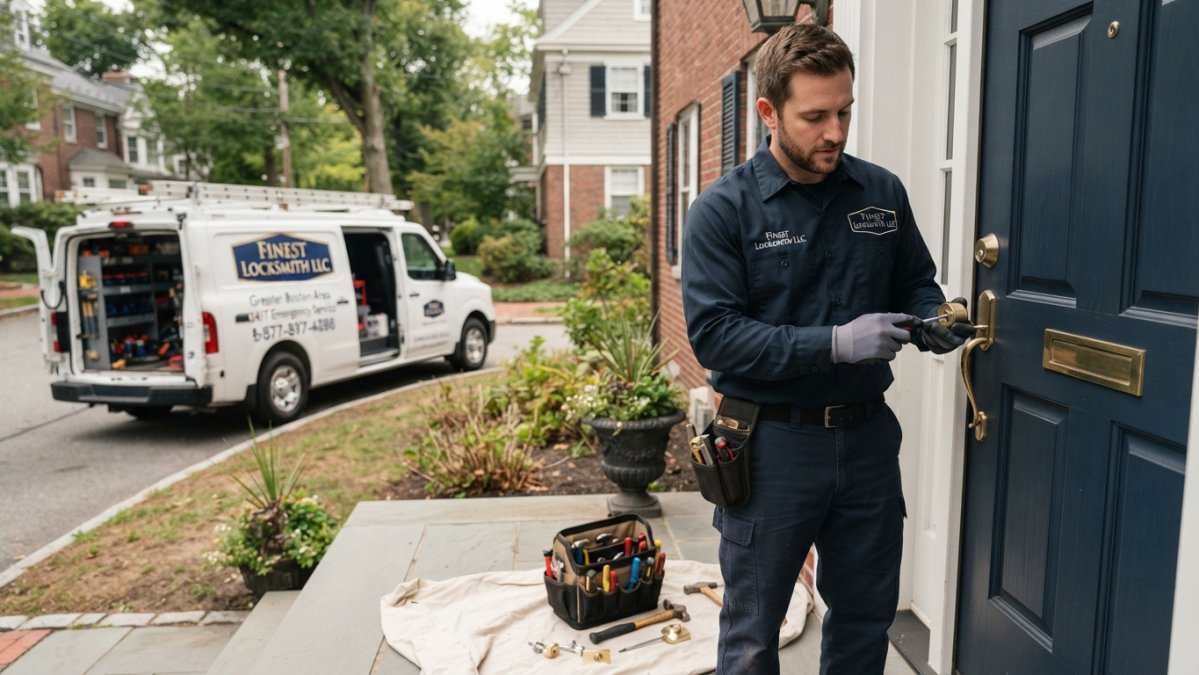
Not all locksmiths are equally reliable or honest. The industry attracts some practitioners who take advantage of homeowners in urgent situations. Learning how to verify credentials and spot red flags protects you from overpaying or receiving poor work.
Verify credentials and licensing
Start by confirming the locksmith is actually licensed. Licensing requirements vary by state; in Massachusetts, locksmiths must be licensed by the state.
Check whether the business is properly registered. Visit the Secretary of State’s website and search for the company name. A registered business has passed basic legal requirements. If you can’t find them, that’s a warning sign.
Ask how long the locksmith has been in business. A company established 10+ years ago has a reputation to protect and is less likely to engage in deceptive practices.
Request references or reviews from past customers. Google reviews, Better Business Bureau ratings, and testimonials reveal patterns.
Red flags that signal a scam
Be wary of locksmiths who quote prices over the phone without seeing the lock. Every lock is different, and honest locksmiths know they need to assess the situation before quoting.
Avoid locksmiths who pressure you to make decisions immediately or who discourage you from getting a second opinion.
If a locksmith arrives and suddenly announces the problem is worse than you described and the cost is much higher, ask for time to call another locksmith for a second opinion.
Extremely low quotes are another red flag. If one locksmith quotes half the price of others, ask why. Sometimes there’s a legitimate explanation.
Why local experience matters
A locksmith familiar with residential locks in your area understands the specific challenges of older homes, common lock types, and local building codes. This translates to faster diagnosis, better solutions, and fewer mistakes.
Local locksmiths also build reputations within their communities. If they do poor work, word spreads quickly. This accountability encourages quality service. A locksmith serving the same area for years has every reason to treat customers fairly.
National chains may offer lower advertised prices, but local locksmiths typically provide more personalized service and faster response times.
Emergency Lockout Assistance: What to Do Right Now
An emergency lockout is stressful, but staying calm and taking the right steps improves your situation. Here’s what to do while waiting for a locksmith.
Immediate steps while waiting for help
First, confirm you’re actually locked out. Check every door and window for another accessible entry point, and whether you left a door unlocked.
If you have a spare key, check whether a trusted family member or friend is nearby who has it. This is often the fastest solution.
Don’t attempt to force your way in. Kicking doors, breaking windows, or prying locks open causes expensive damage.
Stay in a safe location while waiting.
Have your ID and proof of residence ready when the locksmith arrives. Most reputable locksmiths ask to verify you actually live there before opening the door.
24/7 availability and response expectations
True 24/7 locksmith availability means someone answers the phone at 3 AM and dispatches a technician.
Expect to wait 20-45 minutes for arrival in most situations. Some locksmiths promise 15-minute arrivals; these claims are often unrealistic.
When you call, provide clear information about your location and the type of lock. This helps the dispatcher send the right technician with the right tools.
Ask whether the locksmith can accept payment via credit card, debit card, or cash.
Getting locked out of your home or facing a broken lock is never convenient, but you don’t have to navigate it alone.
Frequently Asked Questions
Can a locksmith repair a lock without replacing it?
Yes. Many residential lock issues stem from worn pins, debris, or misalignment rather than complete failure. A licensed locksmith can disassemble the lock cylinder, clean internal components, adjust pins, or lubricate mechanisms to restore function. Repair is typically faster and more cost-effective than full replacement. However, if the lock has been damaged by forced entry or the cylinder is cracked, replacement is the only option. A technician will assess the damage on-site and recommend the most practical solution.
How can I verify a locksmith before hiring one?
Ask for the technician’s license number and verify it with the relevant licensing board. Request references from recent residential clients. Confirm the business has a physical address and consistent contact information. Avoid locksmiths who quote prices over the phone without inspecting the lock or door. Check online reviews on independent platforms, not just the company’s website. A trustworthy residential locksmith will provide upfront pricing, carry proper ID, and arrive in a clearly marked vehicle with company branding.
How much does residential lock repair cost?
Residential lock repair pricing depends on the lock type, the extent of damage, whether it’s a repair or replacement, and whether the service is emergency or standard hours. Many locksmiths offer flat-rate emergency fees for lockout assistance, which simplifies pricing and eliminates surprise charges. Non-emergency repairs typically cost less than emergency service. For accurate pricing, contact a licensed locksmith directly with details about your lock and situation. Always confirm the total cost before work begins.
What should I do if my front door lock stops working?
First, try troubleshooting: ensure the key is fully inserted and turned slowly, apply graphite lubricant (not oil) to the keyway, and check that the door frame isn’t misaligned. If the lock still won’t turn, try the key in a different lock to rule out a worn key. If these steps don’t help, stop using the lock to avoid further damage and call a licensed locksmith. A technician can diagnose whether the lock needs repair or replacement and restore access to your home safely.