
Table of Contents
- Why Emergency Locksmith Services Cost More
- Understanding Locksmith Service Call Fees and Dispatch Charges
- After-Hours, Weekend, and Holiday Pricing: What to Expect
- Locksmith Pricing Red Flags and Common Scam Tactics
- Essential Locksmith Quote Questions Before Dispatch
- How to Request a Written Estimate and Itemized Invoice
- Lockout Service Fees: What Factors Affect Your Final Bill
- Your Rights When Facing an Inflated Locksmith Bill
- Frequently Asked Questions
Last Updated: October 11, 2026
Why Emergency Locksmith Services Cost More
Emergency locksmith calls cost more than regular business-hours service. This happens for a reason. When you’re locked out at 2 AM on a Sunday, you’re not just paying for the lock-opening skill.
A locksmith who answers calls 24/7 maintains a different cost structure than one who works 9-to-5. They staff technicians around the clock. They keep vehicles fueled and ready. They answer phones at midnight. That infrastructure costs money.
But here’s where many people get blindsided: some locksmiths use emergency pricing as cover for inflated charges. They quote a “flat rate” that sounds reasonable, then add fees you never discussed. Understanding what drives legitimate emergency costs helps you spot the difference between fair pricing and a scam.
At Finest Locksmith LLC, we charge a flat price for emergency services. That’s the standard you should expect from any professional locksmith.
The factors that genuinely increase emergency costs include:
- Time of day: After-hours work (evenings, nights, weekends, holidays) justifies a premium
- Response speed: Faster arrival times cost more to maintain
- Staffing: Keeping technicians on call 24/7 requires higher payroll
- Equipment: Mobile units ready to dispatch at any hour need constant upkeep
- Demand surge: During peak lockout hours, demand exceeds supply, pushing prices up
A legitimate emergency locksmith should explain these costs upfront. If they won’t, that’s a red flag.
Understanding Locksmith Service Call Fees and Dispatch Charges
A service call fee (also called a dispatch fee) is the charge just for the locksmith to show up and assess your situation. This fee covers the cost of dispatching a technician to your location.
This is different from the labor charge or parts cost. The service call fee applies whether the locksmith can solve your problem in five minutes or thirty minutes.
Most locksmiths charge a service call fee, though this varies by region and provider. The fee typically covers:
- Dispatcher time to take your call and schedule arrival
- Vehicle fuel and mileage
- Technician travel time
- Initial lock assessment and diagnosis
Here’s what you need to know: a service call fee should be disclosed when you call. If a locksmith quotes you a price without mentioning a separate dispatch charge, ask directly. Some businesses bundle the dispatch fee into their hourly rate. Others charge it separately and credit it toward the final bill if you hire them.
Before you authorize a locksmith to come, confirm:
- Is there a dispatch fee?
- If yes, what is the amount?
- Will it be credited toward the final bill?
- What happens if you cancel after dispatch?
A professional locksmith will answer these questions without hesitation.
After-Hours, Weekend, and Holiday Pricing: What to Expect
After-hours charges are legitimate. A locksmith working at midnight costs more to maintain than one working at noon.
The pricing structure typically looks like this:
- Regular hours: Base rate
- After-hours: Premium
- Weekends and holidays: Additional surcharge
This is standard across the locksmith industry. The surcharge reflects the real cost of keeping technicians available outside normal business hours.
What you should watch for:
- Vague surcharge language: “We charge extra for late-night calls” without stating the percentage or amount is a red flag
- Undisclosed holiday rates: A locksmith should tell you upfront if your Tuesday lockout will cost more because it’s a holiday
- Compounding charges: Some unethical operators stack multiple surcharges (after-hours + weekend + holiday) on top of a high base rate
Before you confirm dispatch, ask:
- What time does your after-hours rate begin?
- What is the after-hours surcharge (percentage or dollar amount)?
- Is today a holiday that affects pricing?
- Are there any other surcharges I should know about?
Write down the answer. If the final bill doesn’t match what you were quoted, you have documentation to dispute it.
Locksmith Pricing Red Flags and Common Scam Tactics
Certain pricing patterns signal a scam. Learn to spot them before you call.
The teaser rate: A locksmith advertises an impossibly low price online (like $19 for a service call).
The vague quote: You call and say you’re locked out.
The “no-questions” dispatcher: A professional dispatcher will ask detailed questions: What type of property? What kind of lock? Have you tried anything yet?
The cash-only demand: Legitimate locksmiths accept credit cards. A locksmith who insists on cash before or immediately after service has less accountability. If something goes wrong, you have no transaction record.
The fly-by-night operator: A locksmith with no physical address, no license number, no reviews, and a phone number that goes to voicemail is not a safe choice.
The pressure tactic: “I’m five minutes away, can you authorize me to drill your lock right now?” A real locksmith will wait for your approval.
Red flags in pricing specifically:
- Quote given without asking about lock type or property type
- Huge difference between phone quote and final bill
- Refusal to provide an itemized invoice
- Insistence on cash-only payment
- No written estimate before work begins
- Claims that parts cost extra (when not disclosed upfront)
If a locksmith exhibits any of these behaviors, hang up and call someone else.
Essential Locksmith Quote Questions Before Dispatch
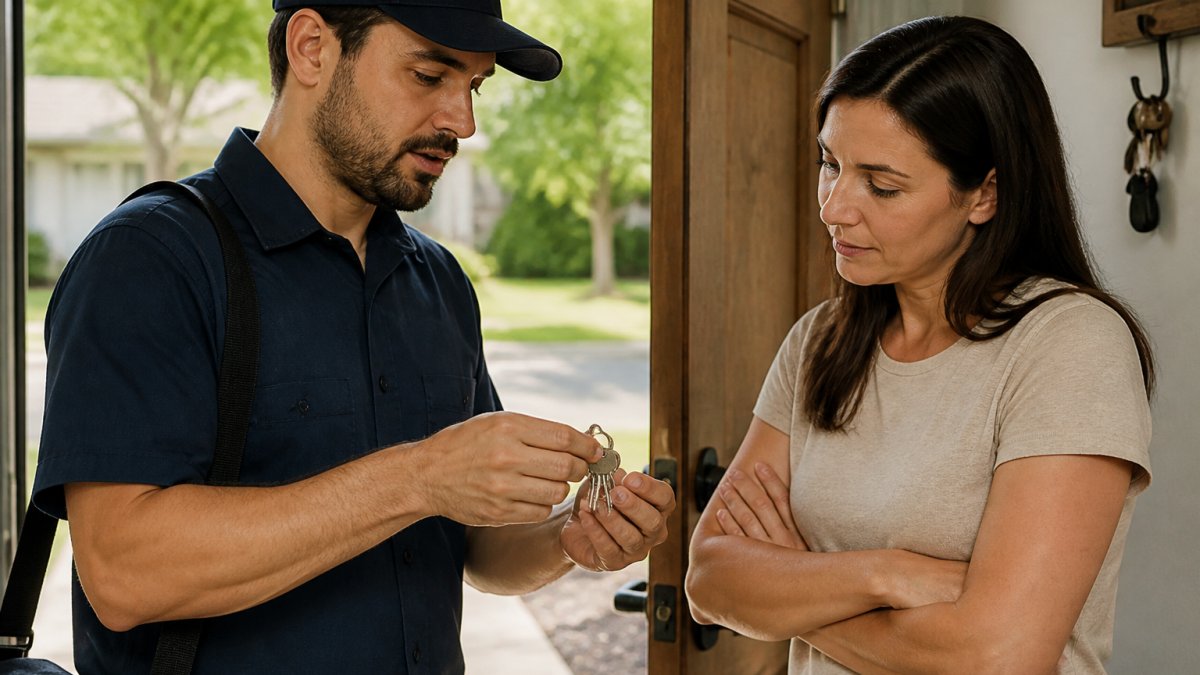
Before you authorize a locksmith to come to your home, ask these specific questions. Write down the answers.
About the service:
- What is your service call fee?
- Is the service call fee credited toward the final bill?
- What is your labor rate (hourly or flat rate for this type of job)?
- Will you provide a written estimate before you start work?
- If I’m locked out of my car, is that a different price than a residential lockout?
About pricing:
- Are there any surcharges for after-hours service? If yes, what percentage or amount?
- Is today a holiday that affects pricing?
- If my lock needs to be drilled or replaced, how much will that cost?
- Are there any other charges I should expect (mileage, parts markup, etc.)?
- What is your cancellation policy if I decide not to proceed after you arrive?
About the technician:
- Will you be the one arriving, or will another technician come?
- How long do you estimate the job will take?
- What is your estimated time of arrival?
About authorization:
- Will you ask for approval before doing any work that wasn’t discussed (like drilling a lock)?
- Can you provide a detailed, itemized invoice after the work is complete?
A professional locksmith will answer all of these questions clearly. If they refuse or get defensive, that’s a sign to call someone else.
How to Request a Written Estimate and Itemized Invoice
A written estimate before work starts protects you. An itemized invoice after work is complete proves what you paid for.
Requesting the estimate:
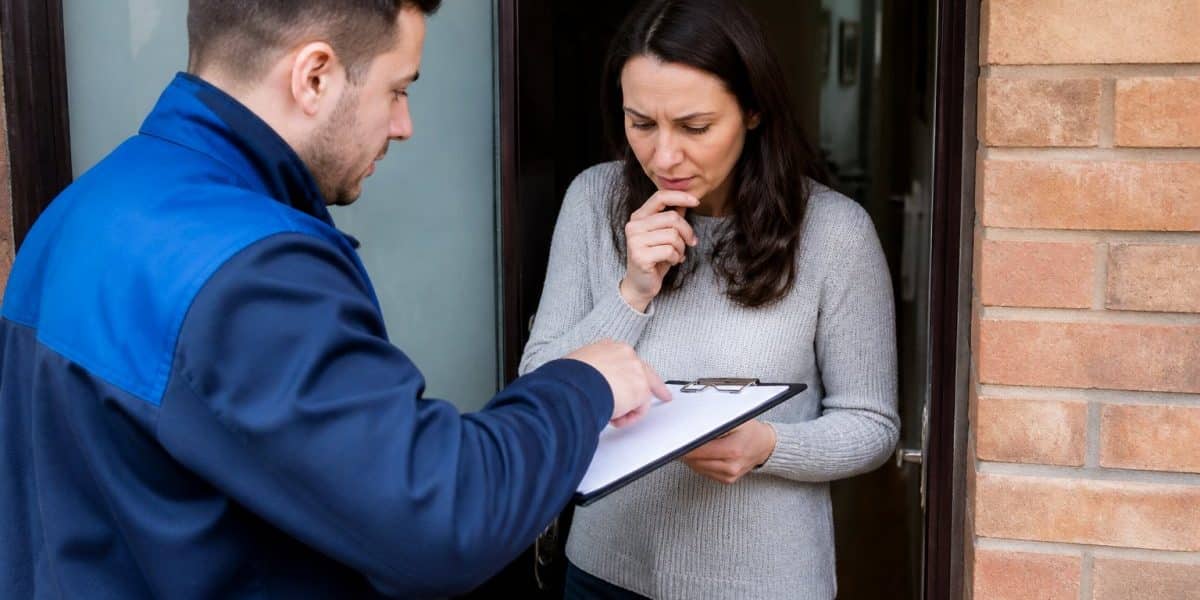
When you call, say: “I need a written estimate before you start any work. Can you provide that?”
A professional locksmith will either:
- Email or text you an estimate before arriving
- Provide a written quote in person before starting work
- Clearly state over the phone what the charges will be and follow up with written confirmation
Do not let a locksmith start work without a written estimate. If they refuse, end the call.
What the estimate should include:
- Service call fee (or notation that it’s waived)
- Labor rate and estimated time
- Parts cost (if applicable)
- After-hours or holiday surcharge (if applicable)
- Any other charges
- Total estimated cost
After the work is done:
Ask for an itemized invoice that breaks down exactly what you paid for. It should match the estimate. If it doesn’t, ask why before you pay.
A sample itemized invoice might look like:
| Item | Amount |
|---|---|
| Service call fee | $50 |
| Labor (30 minutes) | $75 |
| Lock rekey | $25 |
| After-hours surcharge (10%) | $15 |
| Total | $165 |
This format is clear and easy to verify. If your invoice is vague or has a line item called “miscellaneous charges,” ask for a breakdown.
Keep your written estimate and final invoice. If you dispute the charge with your credit card company or file a complaint, you’ll need both documents.
Lockout Service Fees: What Factors Affect Your Final Bill
The final cost of a lockout depends on several factors. Understanding each one helps you anticipate the total.
Lock type: A simple pin-tumbler residential lock costs less to open than a high-security lock or a smart lock.
Job complexity: A locksmith opening a residential door takes less time than opening a car with the window up and the keys locked inside.
Time required: A straightforward lockout might take 15 minutes. A difficult lock or a car with security features might take an hour.
Whether parts are needed: If you just need to be let in, the cost is labor only.
Travel distance: Some locksmiths charge mileage if you’re far from their service area.
Time of day and day of week: As discussed, after-hours, weekend, and holiday service costs more.
Your location: Urban areas often have more locksmiths competing on price. Rural areas may have fewer options and higher costs.
Before you authorize work, ask the locksmith to estimate how each factor affects your bill.
That clarity lets you decide whether to proceed.
Your Rights When Facing an Inflated Locksmith Bill
If you receive a bill that’s dramatically higher than the estimate you were quoted, you have options.
Step 1: Ask for a detailed breakdown. Contact the locksmith and ask for an itemized invoice explaining each charge. Sometimes charges are legitimate but poorly explained.
Step 2: Point out the discrepancy. If the final bill is significantly higher than the written estimate, say: “Your estimate was $150. The bill is $380.
Step 3: Dispute the charge. If you paid by credit card, you can dispute the charge with your card issuer.
Step 4: File a complaint. Contact your state’s consumer protection agency or the Better Business Bureau.
Step 5: Consider small claims court. If the overcharge is significant and the locksmith won’t refund it, you can sue in small claims court.
Prevention is easier than recovery. That’s why getting a written estimate and itemized invoice before and after service matters so much.
Frequently Asked Questions
What should I ask a locksmith before they arrive to avoid hidden locksmith service fees?
Before dispatch, ask for a written estimate that itemizes the service call fee, labor charge, parts cost, and any after-hours surcharge. Confirm whether the quote includes travel charges and whether additional fees will apply if the job takes longer than expected or requires drilling. Ask about the technician’s arrival time window and whether there’s a cancellation fee. Request that the locksmith call you before performing any work that wasn’t part of the original estimate. A transparent provider will answer all these questions upfront.
How much does a typical locksmith service call fee cost?
Service call fees vary depending on the time of day, your location, and the locksmith’s overhead. This fee covers the dispatcher’s time, vehicle wear, and the technician’s travel. After-hours calls (evenings, nights, weekends, or holidays) often carry a higher dispatch fee or emergency surcharge. Always ask whether the service call fee is waived if you proceed with the work, or if it’s a separate, non-refundable charge. Request the exact amount before authorizing the visit.
What are the biggest locksmith pricing red flags I should watch for?
Red flags include quotes that seem unusually low (often a bait-and-switch tactic), vague estimates without itemization, refusal to provide a written quote, pressure to authorize drilling before you’ve approved it, and claims that the final price will be ‘about’ a certain amount with no guarantee. Avoid locksmiths who can’t clearly explain what each charge covers or who demand cash-only payment upfront. Established locksmiths provide transparent pricing, written estimates, and authorization steps before doing extra work.
Can a locksmith charge more than the quoted price?
A reputable locksmith should honor the quoted price unless you authorize additional work in writing. If the job requires drilling, replacing hardware, or rekeying beyond the original scope, the technician must call and get your approval before proceeding and charging extra. If you receive a bill higher than the estimate, request an itemized invoice explaining each charge. Document the original quote, your approval (or lack thereof) for extra work, and the final invoice. If the charges seem unjustified, contact your state’s consumer protection office or file a complaint with the Better Business Bureau.
Locksmith costs don’t have to be a mystery. When you know what to ask and what to watch for, you can avoid hidden fees and scams. Get a written estimate before dispatch, confirm all surcharges upfront, and demand an itemized invoice after the work is done. If you’re locked out and need fast, honest service, Finest Locksmith LLC offers a flat price for emergency lockouts with no surprise charges. Call us now for immediate response and transparent pricing.